
Ductwork Concerns:
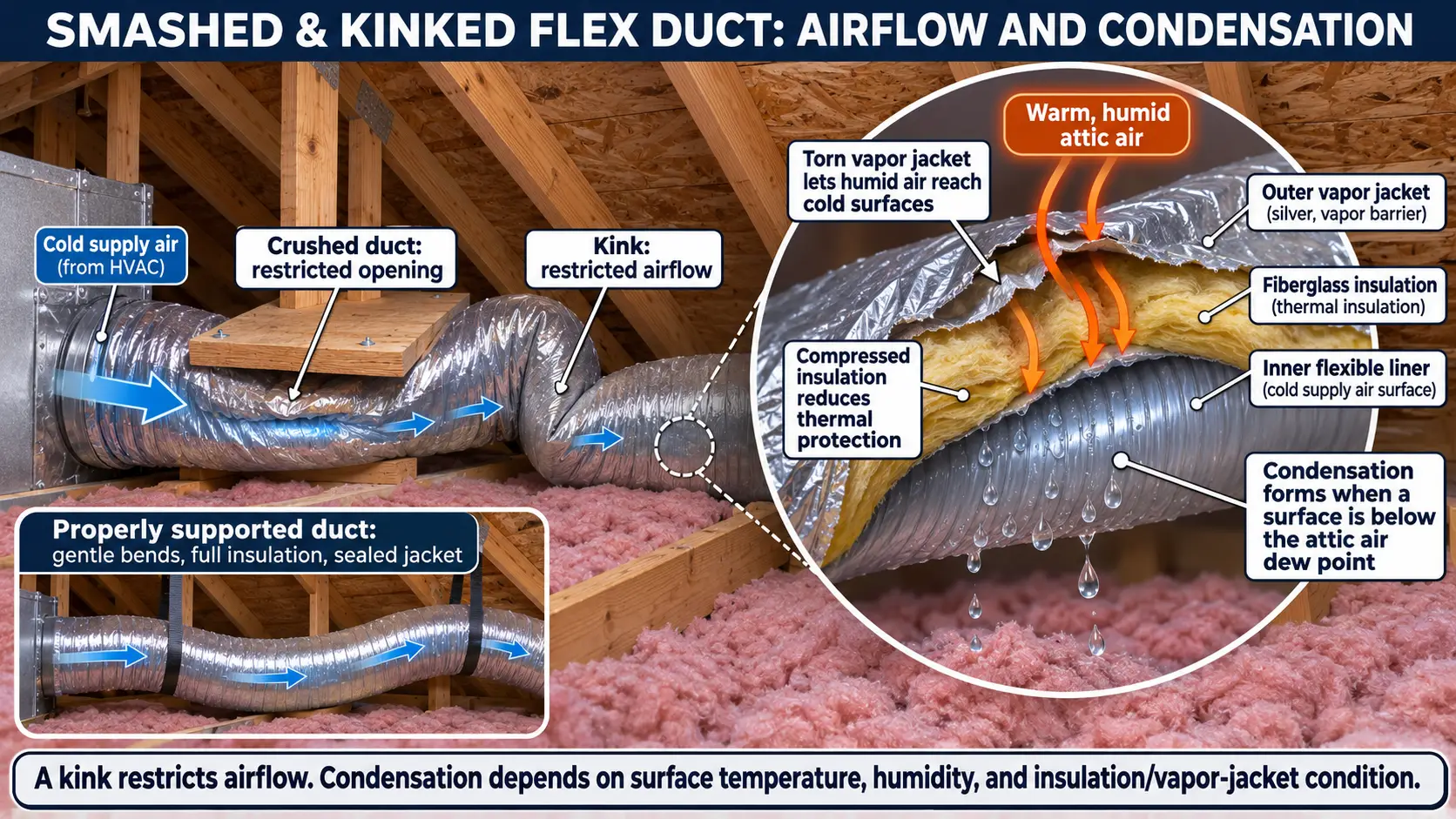
 Kinking, crushing, or smashing flexible ductwork in an attic restricts airflow, making it harder for the heating and cooling system to deliver air to the rooms it serves. This can also contribute to condensation and mold activity.
This can result in:
- Uneven temperatures: Rooms may stay too hot in summer or too cold in winter.
- Higher energy use: The system may run longer to reach the thermostat setting.
- Increased resistance in the duct system: Severe restrictions can reduce overall system airflow and affect equipment performance.
- Equipment problems: Inadequate airflow across the equipment can contribute to an evaporator coil freezing during cooling or a furnace overheating during heating.
- Noise: Sharp bends and compressed ducts can cause whistling or rushing-air sounds.
- Condensation and moisture damage: If crushing damages or compresses insulation, or tears the outer vapor jacket, humid attic air can reach cold surfaces and condense. This can wet insulation, stain ceilings, and create conditions favorable for mold growth.
The proper correction is to reroute and support the duct with gentle bends, extend the inner liner properly, and replace damaged sections. Simply reshaping the outside may leave the inner liner restricted or torn.
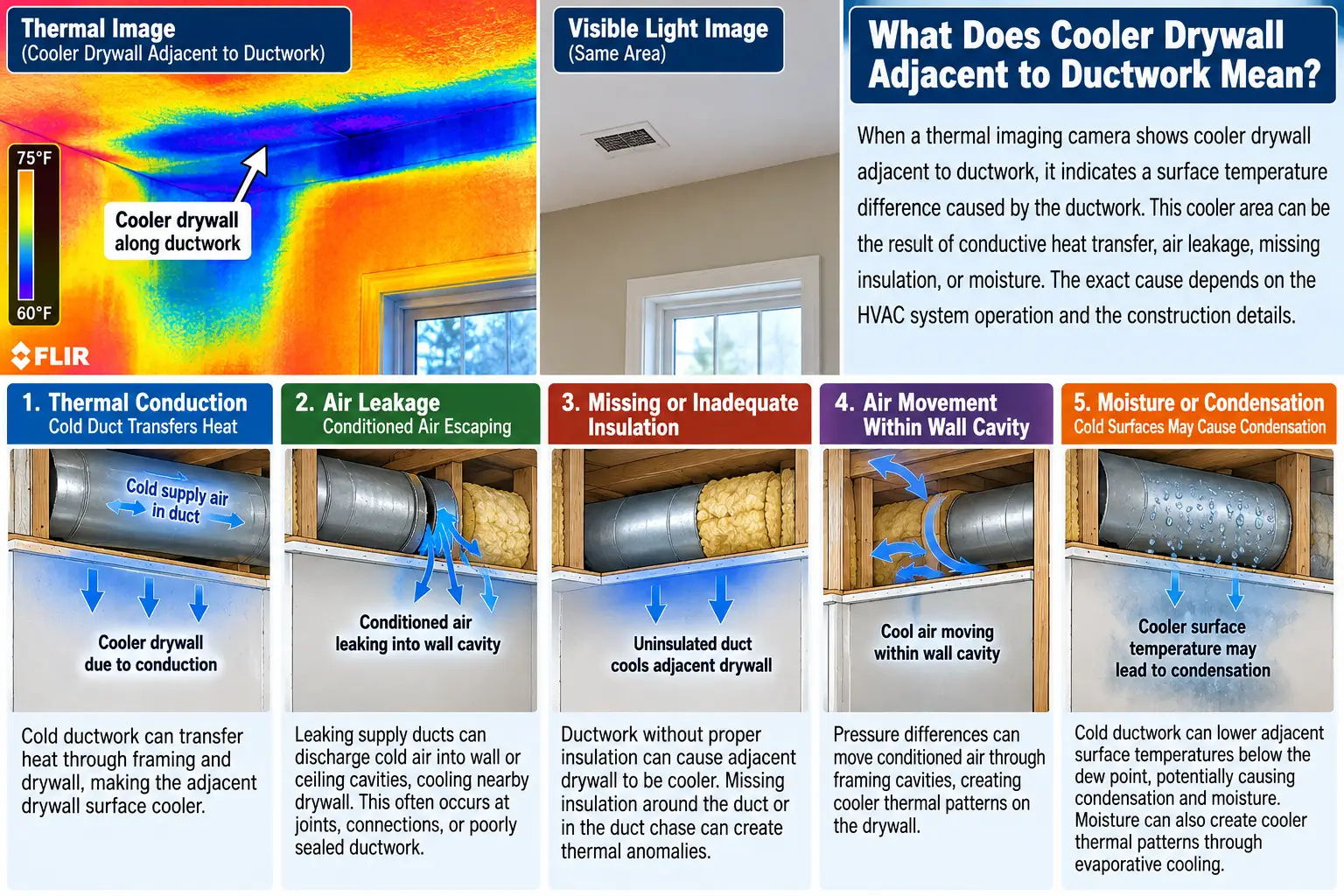
 When possible, we recommend sealing and insulating all ducts inside the thermal boundary to help reduce heat loss and condensation. Verify all ducts are properly secured and sealed to all trunk lines to prevent heat loss and condensation. One high-risk area for condensation and mold activity is where insulation is missing or inadequate between the duct boot and outer bandboard. Verify that proper insulation is present, or update it as needed.
Beyond smashed or kinked flex duct, duct location, sizing, leakage, and return-air design can affect indoor air quality by drawing in contaminants, creating pressure imbalances, and contributing to moisture problems.
| Concern | How it can affect indoor air quality |
| Leaky returns in attics, crawlspaces, or damp basements | Can draw dust, insulation fibers, odors, moisture, and soil gases into the system and distribute them throughout the home. |
| Ducts or air handlers in garages | Leaks on the return side can draw vehicle exhaust, gasoline vapors, and stored chemical fumes into the house. |
| Leaky supply ducts outside the conditioned space | These leaks lose air intended for the house and can depressurize the interior, drawing replacement air through the building envelope or from crawlspaces. |
| Building cavities used as return ducts | Unsealed wall cavities or floor-joist spaces can draw air from unintended, potentially contaminated locations. |
Other sizing and placement concerns include:
- Undersized supply or return ducts: Excessive resistance can reduce airflow and impair cooling performance. Duct size must account for airflow, run length, fittings, and available fan pressure—not just the diameter of the equipment connection. handbook.ashrae.org
- Inadequate return paths from bedrooms: Closing doors can pressurize bedrooms and depressurize the central return area, driving air through envelope leaks. Dedicated returns, transfer grilles, or jump ducts may be needed; a door undercut alone may be insufficient. handbook.ashrae.org
- Poor insulation or damaged vapor jackets in humid spaces: Cold ducts can develop condensation, wetting nearby materials and creating conditions favorable for mold. Insulation must be sufficient and its exterior vapor-control layer continuous. handbook.ashrae.org
- Oversized cooling equipment paired with unsuitable ductwork: Short cooling cycles may satisfy the thermostat before enough moisture is removed, leaving the home cool but humid. This is an equipment-sizing issue as well as a distribution concern.
